The U.N. System is Worth a Roll in the Mud
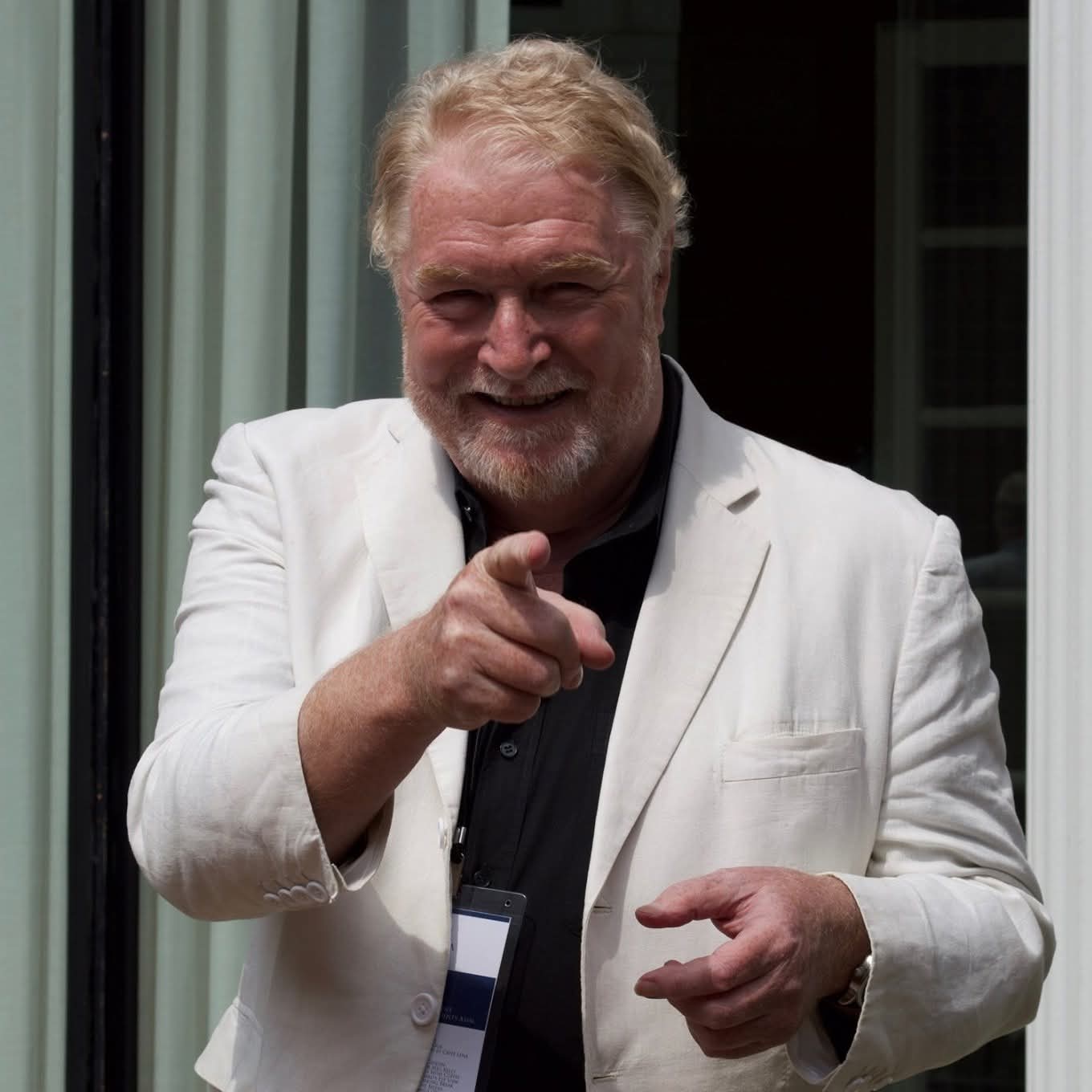
Ian Williams
MANY GOVERNMENTS’ pro-Israeli votes in international forums like the U.N. starkly disregard the expressed views of their people, and they get away with it with help from media inattention and misdirection. From Albania to Morocco vociferous crowds show their low opinion of the Zionist project’s latest depravities while their governments either openly support Israel or offer only mild condemnation of its continuing annexation and genocide.
In particular, German politicians are trapped in a thought-crime cage about the Holocaust. Other countries’ elites are bought by domestic or global pro-Israel lobbies. Or they prefer not to risk a vote against the U.S. Their fuzzy U.N. votes about annexation, occupation and aggression (which violate the charter itself) are as bizarre as physicists voting down the law of gravity.
For example, Canada preens itself with a self-image as an independent middle power, an exemplary global citizen. And in the past, it had almost deserved such an accolade, consistently supporting U.N. resolutions on the Middle East. Then Stephen Harper of the Conservative Party became prime minister, and Canada’s delegates contrived to reverse all of their voting patterns, albeit without actually abandoning official stated positions. It maintained its new lack of integrity under the succeeding Liberal government.
The Middle East votes and prevarications lost Canada its chance for a Security Council seat in 2020. As one of the few Canadian analysts to actually mention the Middle East factor explained, “We have been inconsistent in our support for human rights, going so far as to vote against almost every U.N. resolution upholding Palestinian rights.”
Similarly, this year the Germans lost their Security Council seat bid after anticipating a walkover.
Bonn and Ottawa both made pathetic excuses to their electorate: Canada blamed lack of campaigning time, while Germany blamed Russian opposition after Ukraine. “Don’t mention the war!” is the rule of Omertà since suggesting that support for Israel cost Ottawa its seat could easily be twisted as in some way anti-Semitic.
HOW COUNTRIES VOTE
Parsing the algorithm of how a country votes in the U.N. is complicated, but the constants are straightforward enough: pro-Israel money, U.S. bullying and accusations of anti-Semitism (though the latter is losing its sting). For a feel of the complexity, we should look at Albania and its neighbor Kosovo. They are nominally Muslim countries; Serb nationalists accuse them of being festering hotbeds ofjihadist Turks, but in fact their Islam is very relaxed and ecumenical—but then, bigotry is never an exact science. Since Machiavelli trumps principle, Tirana and Pristina thought they could get away with being sweethearts to Israel, perhaps made easier since the Palestine Authority and many Arab states have sided with Serbia against recognition for Kosovo while the Serbian government, resonating in generic genocidaire solidarity, gives military and diplomatic support to Israel. The vagaries of unprincipled diplomacy in the ethno-nationalist segment of the Venn diagram mean that Serbia also supports Russia in the name of Slavic unity.
Similarly one would have thought that Somaliland, the stable secessionist breakaway from Somalia, would have identified with a Palestinian state seeking international recognition. Instead, it opened an embassy in occupied Jerusalem, no doubt after securing financial rewards for its government and sundry politicians. Its people support the Palestinians. Abbas’ fawning gerontocracy refuses to support Western Sahara, whose annexation by Morocco was endorsed by the U.S. about the same time as Washington recognized Israel’s annexation of the Golan Heights, the West Bank and East Jerusalem.
Examples of elitist disdain for popular revulsion for Israel are not hard to find but two are outstanding: The Moroccan street’s rambunctious support for Palestine against the Moroccan regime’s consistent toadying to Tel Aviv and the anti-Israel signs brandished by Albanian mass protesters against Prime Minister Edi Rama’s sell out to Jared Kushner’s real estate empire.
Recent Israeli deals to secure the dubious prestige of its recognition insist that the country in question open its embassy in Jerusalem. Even countries friendly to Israel generally refuse to do that because it violates international law. Additionally, both Western Sahara and Somaliland have been mooted as destinations for Palestinians (soon-to-be?) ethnically sluiced from Gaza and the West Bank.
THE CURIOUS CASE OF KARIM KHAN
This mosaic of Machiavellian trade-offs could almost make global citizens despair, but perversely the unrelenting efforts by the ethically dubious to subvert and control the system are testimony that the U.N. system is worth fighting for.
The International Criminal Court (ICC) case against Binyamin Netanyahu has provoked a serious multi-pronged global conspiracy to degrade the tribunal. U.S. sanctions against judges and prosecutors are vindictive and preemptively punitive. Francesca Albanese, an Italian citizen, has withstood political and financial attacks of an unprecedented viciousness. But are we really to believe that the European Union, Britain, Canada and the rest of the world have no tools at all to resist this persecution of international civil servants who are also their own nationals?
In the case of ICC prosecutor Karim Khan, the allegations against him of sexual misconduct might have some substance—there is indeed a lot of that in the U.N. But the investigations turned up blank until the ambiguities in the report of the U.N. Office of Internal Oversight Services (OIOS) gave a spurious excuse for diplomats to continue his suspension regardless of lack of evidence. It is of course a total coincidence that he was preparing the case against Netanyahu at the time.
The OIOS make the Keystone Kops look like paragons of forensic efficiency and is emblematic of the need to avoid putting U.N. organs on a pedestal. It was set up to persecute U.N. procurement staff that Madeleine Albright disliked for not giving U.N. contracts in Iraq to a CIA-backed company. OIOS staff went on to feed material for the now-forgotten U.S.-stampeded “Oil For Food” investigation, so their role in this is indeed suspicious.
But once again the tacit connivance of the British government in Khan’s persecution emphasizes London’s abandonment of a distinguished member of the British Bar, from which, in the latest twist of the knife, he is now suspended. In contrast they lionized and supported him when he led the case against Vladimir Putin.
The dots connect themselves. If you think this is all happenstance, I have some stone tablets on offer with the title deeds to beachfront property in Gaza. As Khan’s counsel more tactfully put it, “The central fact remains unchanged: the independent Judicial Panel unanimously concluded that there was insufficient evidence to establish misconduct. The Bureau (of diplomats) nevertheless reached a different conclusion despite that evidential record. In doing so, it acted as an adjudicative body without the institutional safeguards, judicial expertise or procedural protections ordinarily expected of such a process. That is why the fairness and legality of its decision remain open to serious question.” In fact the Bureau are diplomats sent abroad to lie for their country (or in this case, for another country).
A LAWLESS WORLD
The persecution of Khan and Albanese does not discount the importance of the international legal apparatus, as demonstrated by one of the conditions for the “Framework Agreement” signed by Israel and Lebanon on June 26. Its draft says that Israel and Lebanon shall “cease all hostile or negative actions in international political or legal forums.”
So, in return for the hundreds of thousands of displaced and dead Lebanese, foreswearing cases against their murderous occupiers, Lebanon is spared defending itself against Israeli charges. This is a deal that only governments unburdened by international law or principles (or sense of shame) would devise.
In a similar travesty of legality, President Donald Trump’s Board of Peace is awarding legal immunity for itself as it empowers itself to seize property in Gaza “free of charge.”
The reactivation of the Board of Peace could of course be related to the whispered candidate to replace António Guterres, Bulgarian Nikolay Mladenov, who pipped Tony Blair to become the Toady-in-Chief of the Board. It makes him a serious contender against the Argentinian Rafael Grossi (of International Atomic Energy Agency fame), who now only has a few months to pull a nuclear casus belli against Iran. And in the great tradition of impartiality, the former United Arab Emirates ambassador Lana Nusseibeh is about to enter the fray, representing a tiny country that has made a name for itself as a peacemaker in the Trumpian mold, initiating wars from Iran to Yemen by way of Sudan.
There is some comfort that all these reprobates think the U.N. is worth rolling in the mire for. One wonders whether any of them have studied the thoughts of Marx (Groucho that is) and wondered whether they should really join any club whose standards are debased enough to accept them.
Washington Report on Middle East Affairs, August/September 2026, pp. 18-19
- Log in to post comments